Bib045
Warm-Up Exercises for Walking: Five Minutes Before You Head Out
- Topic
- Exercise
- Written
- Read in
- 3 min
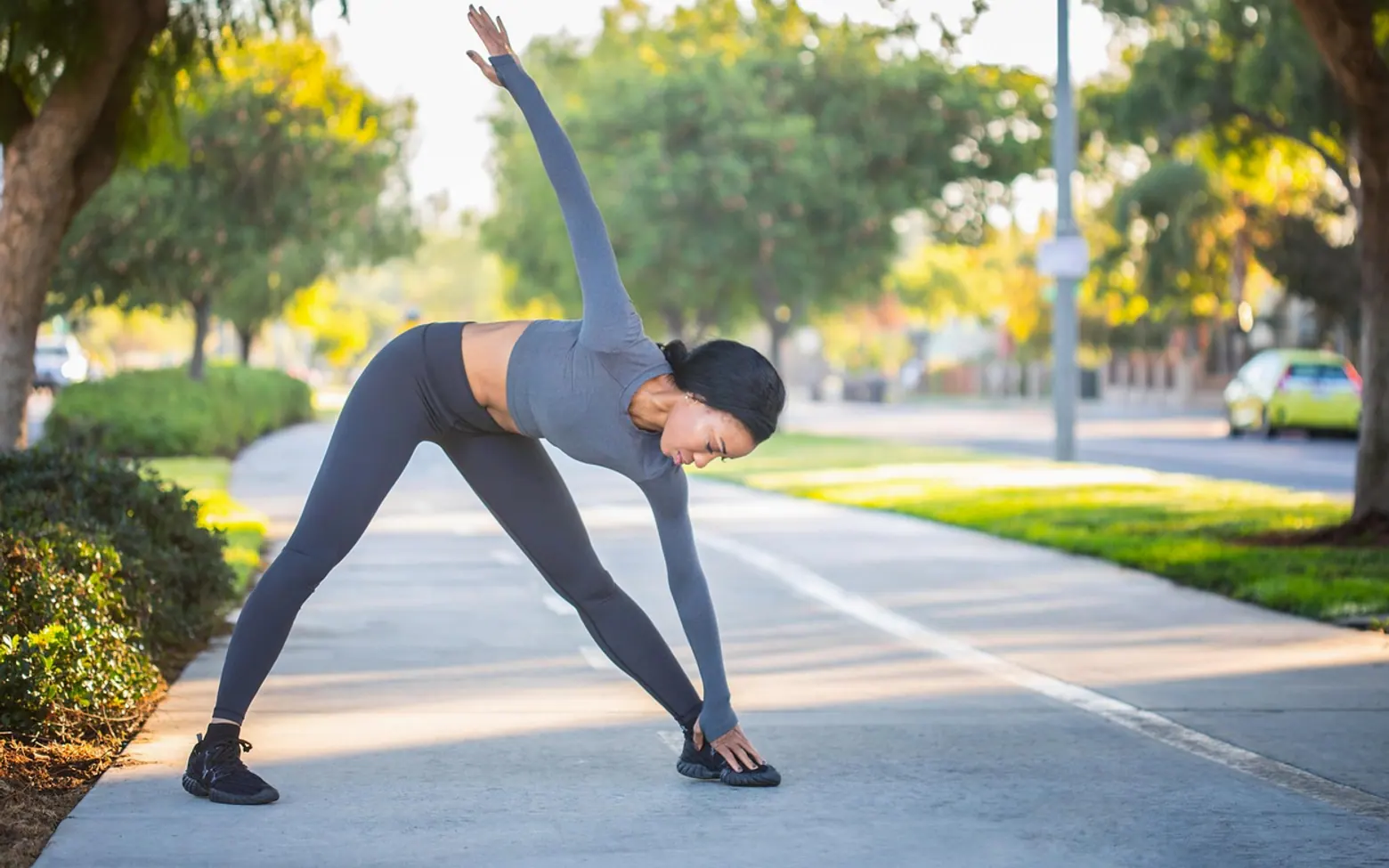
Stiff calves and creaky hips in the first ten minutes of a walk are common. A short routine of gentle, moving warm-up exercises gets the body ready without turning the walk into a workout.
You step out of the door, set off at a good clip and spend the first ten minutes with tight calves, a stiff lower back and ankles that feel like they belong to someone else. By the time everything loosens up, half the walk is gone. That is the problem a warm-up solves.
For an easy stroll, starting slowly is warm-up enough. But before a brisk walk, a hilly route or a long weekend outing, five minutes of gentle movement helps the joints, muscles and breathing ease into the effort.
Moving, not holding
A good warm-up for walking uses dynamic movements: controlled swings, circles and marches that take the joints through their range. Long static stretches, where you hold a position for half a minute, are better kept for after the walk, when the muscles are already warm.
A five-minute routine
Do these near your front door, holding a wall, fence or railing for balance if you need to.
- March on the spot (1 minute). Start with small knee lifts and let them grow, swinging the arms naturally.
- Ankle circles (30 seconds each side). Lift one foot slightly and draw slow circles in both directions.
- Leg swings (10 each side). Holding a support, swing one leg forward and back like a pendulum, keeping the movement relaxed rather than high.
- Hip circles (10 each way). Hands on hips, feet apart, trace wide circles with the pelvis.
- Calf raises (10 to 15). Rise onto the balls of both feet, then lower slowly.
- Arm circles and shoulder rolls (30 seconds). Loosen the upper body so your arms swing freely once you set off.
Then begin walking at an easy pace for two or three minutes before speeding up. That gentle start is part of the warm-up, not a waste of time.
Adjusting for your day
- Cold mornings: spend a little longer on marching and ankle circles, and wear a layer you can take off later.
- Stiff joints: keep the range small and make every movement smooth; it should never hurt.
- Older walkers: do the routine next to something solid to hold, and pair it with the safety habits in this guide to walking exercise for older adults.
- Short on time: a minute of marching and some calf raises are better than nothing.
Small mistakes that undo the warm-up
A few habits take the benefit away again. Bouncing hard at the end of each swing jerks the joints instead of loosening them. Rushing through the moves in thirty seconds leaves the muscles as cold as before. Warming up indoors and then standing at a crossing for five minutes in the wind cancels much of the effect, so start walking soon after you finish. And a warm-up should leave you slightly warmer and looser, never tired; if it feels like a workout, scale it back.
Cooling down afterwards
Finish the walk with a few minutes at an easy pace, then hold a gentle calf stretch and a front-of-thigh stretch for around 20 to 30 seconds on each side. If something hurts rather than just feels tight, stop and, if it keeps happening, ask a doctor or physical therapist to take a look.
If your walks are getting longer because you are chasing a higher step count, the ideas for reaching 10,000 steps a day fit nicely around this routine. And if you would like someone to check your posture or design a fuller warm-up, it helps to know what a good fitness trainer should do for you before you book a session.
Running alongside
| Bib | Article | Written | min |
|---|---|---|---|
| 044 | Exercises for Menopause: Strength, Cardio, Balance and Rest | Nov 4, 2026 | 04 |
| 043 | Walking Exercise for Seniors: Building a Safe, Steady Routine | Oct 29, 2026 | 05 |
| 041 | Walking Up Stairs for Exercise and How to Start Safely | Oct 8, 2026 | 03 |
| 040 | Walking in Place for Exercise - A Simple Indoor Routine That Actually Works | Oct 8, 2026 | 03 |